
Pace: move at your pace
Pace is an adaptive fitness app that helps college students build movement habits that actually last, grounded in RESET, a UX framework I developed to address why digital health tools lose users after the initial motivation wears off.
Impact & outcome
Automatic movement tracking
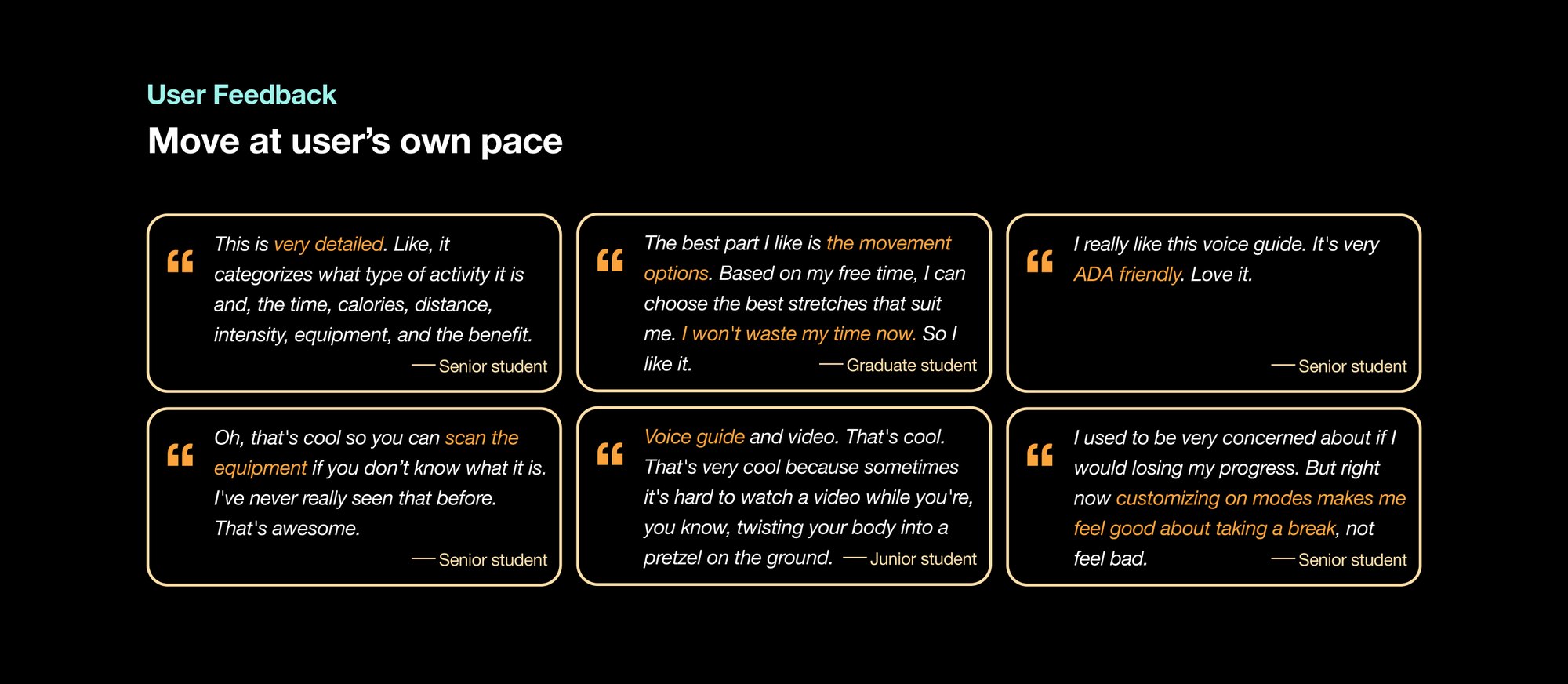
Pause your goals without feeling guilty
Why do people quit their fitness apps?
College is a high-leverage moment for building habits that can carry into adulthood. Yet research shows that while digital health interventions can increase step counts in the short term, their effects on broader physical activity and sedentary behavior are limited. Meanwhile, a median of 70% of health app users abandon the product within the first 100 days. For my MFA thesis at SCAD, I wanted to understand what happens after the initial motivation fades.
What does the research say about why mHealth tools fail?
Across the literature, three recurring barriers emerged: manual tracking, poorly timed notifications, and limited personalization. Existing tools also tended to focus on extrinsic mechanics such as streaks, points, and leaderboards, without addressing the longer transition toward intrinsic motivation.
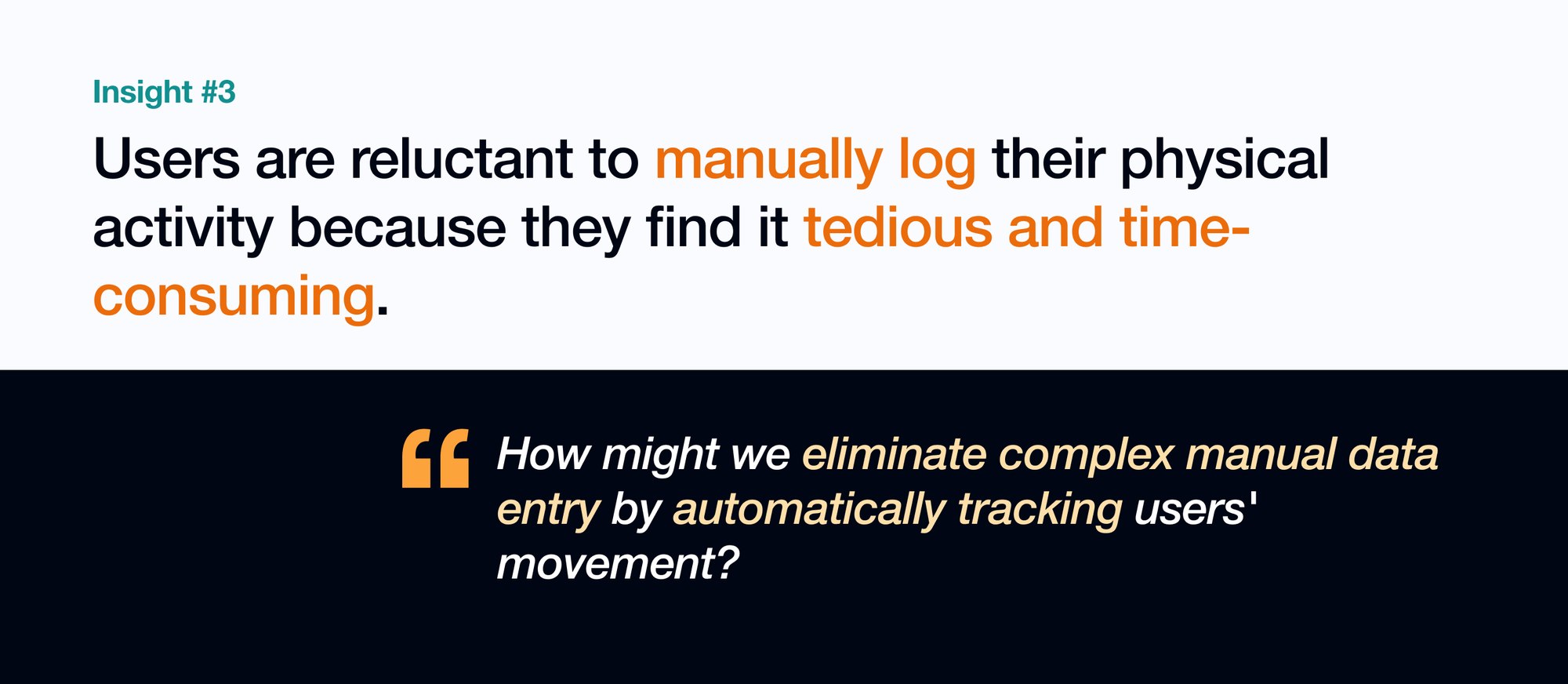
Manual effort creates friction
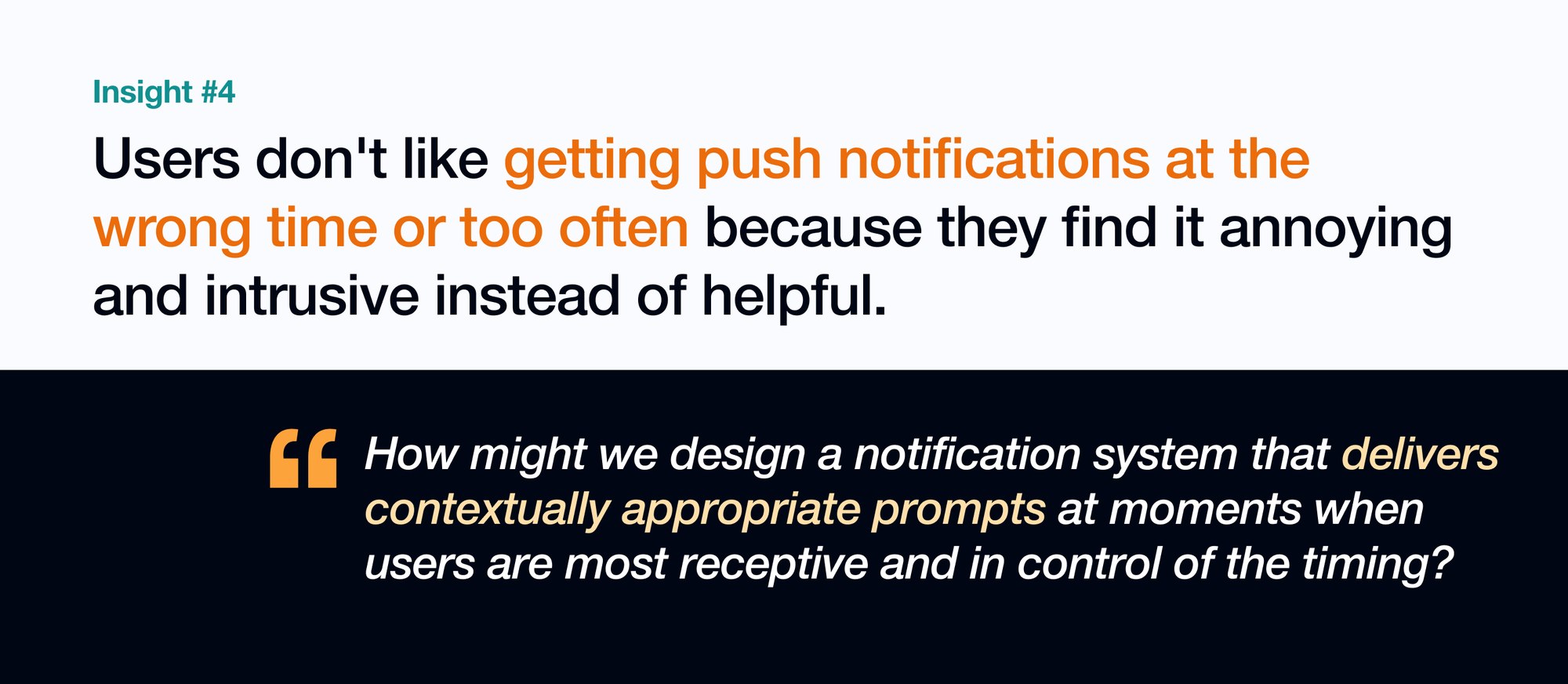
Notifications can become pressure
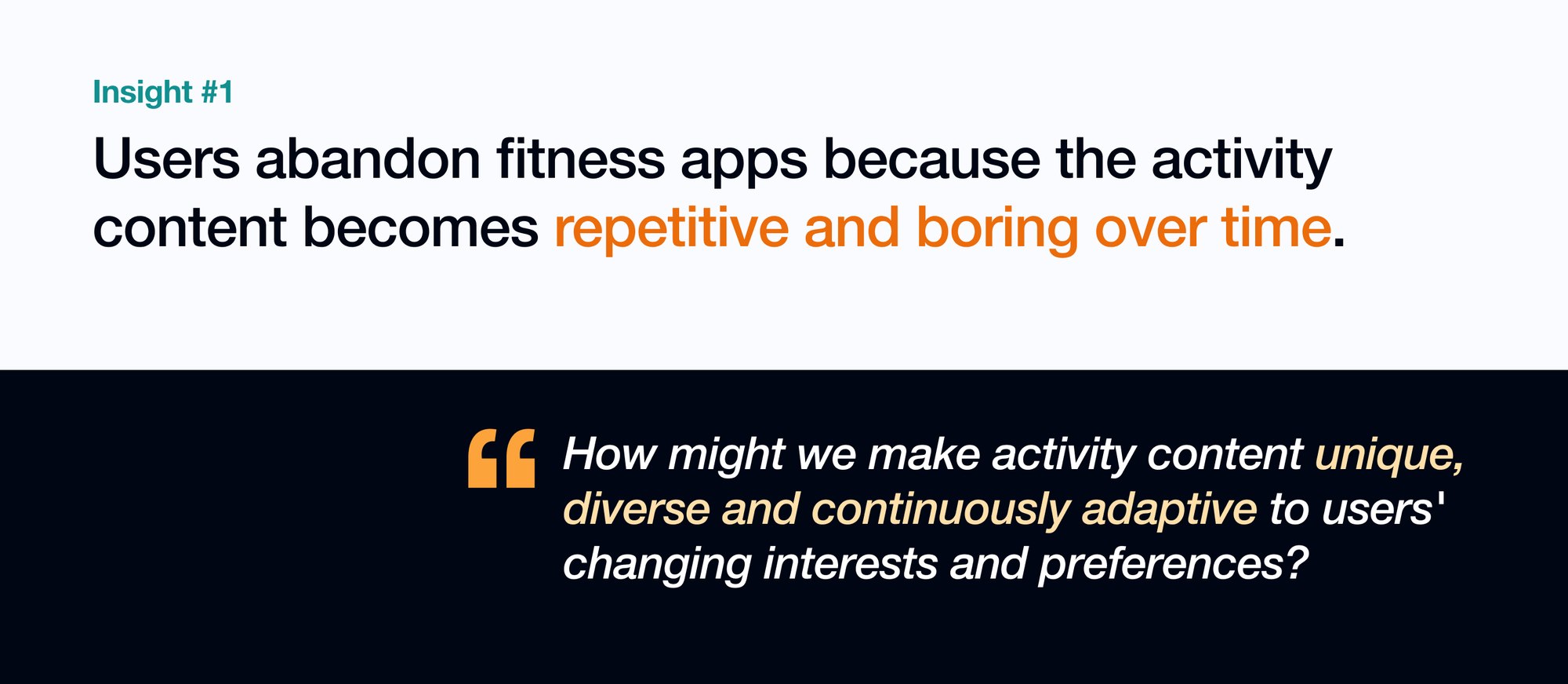
Static content loses relevance
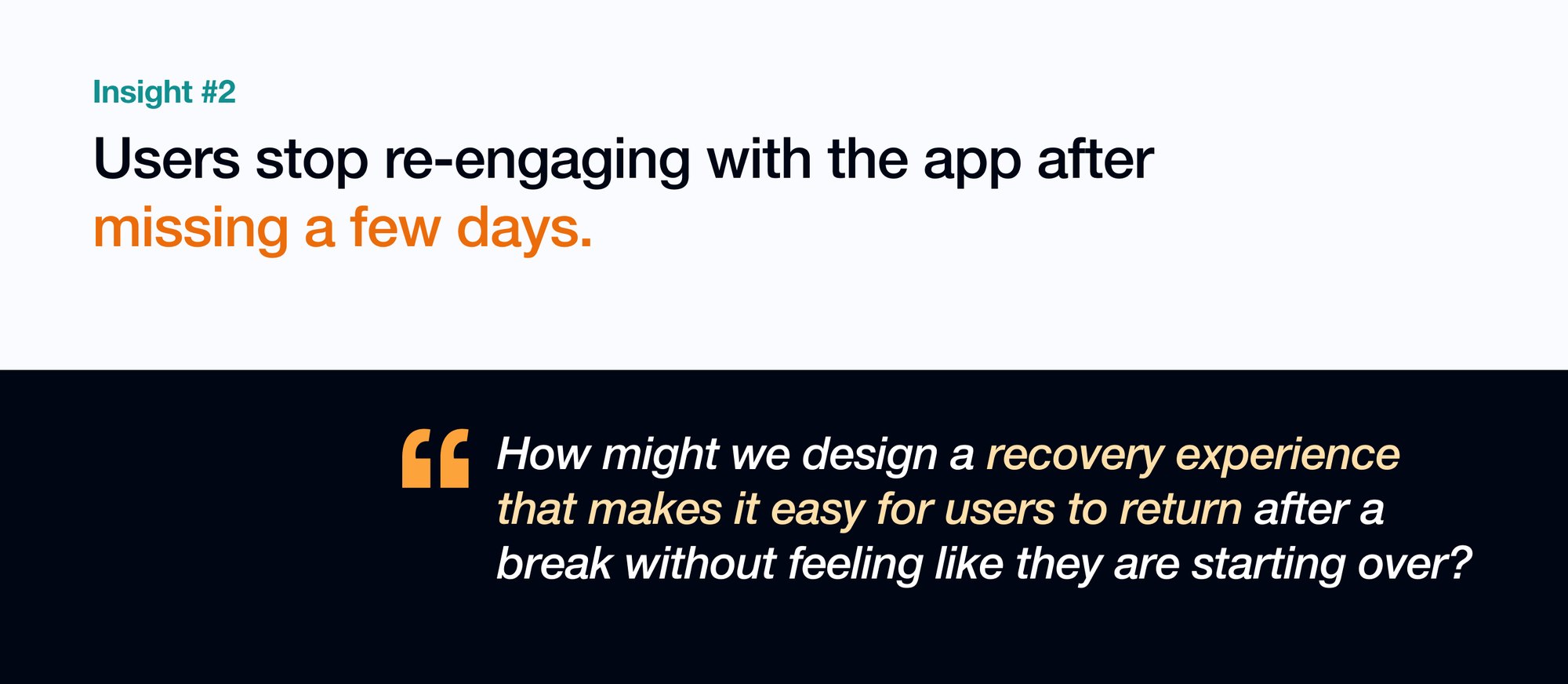
Recovery is largely overlooked
The college context is underexplored
Competitive analysis reinforced the same gaps
Current digital health tools designed to support physical activity fail to sustain user engagement, especially for college students, leading to high abandonment rates.
How might we support college students in increasing and sustaining engagement with health tools by designing a low-friction, personalized system?
From broad patterns to lived experiences
I conducted a large-scale survey with 529 responses alongside 10 in-depth interviews to uncover both the situation and its underlying reasons. The findings were clear: students didn’t just require more motivation; they needed a product that could withstand the challenges of real life.
481 data points became 5 design opportunities
I coded the interview data from raw observations into 95 initial groups, 22 refined themes, 10 higher-level clusters, and ultimately 5 core insights.
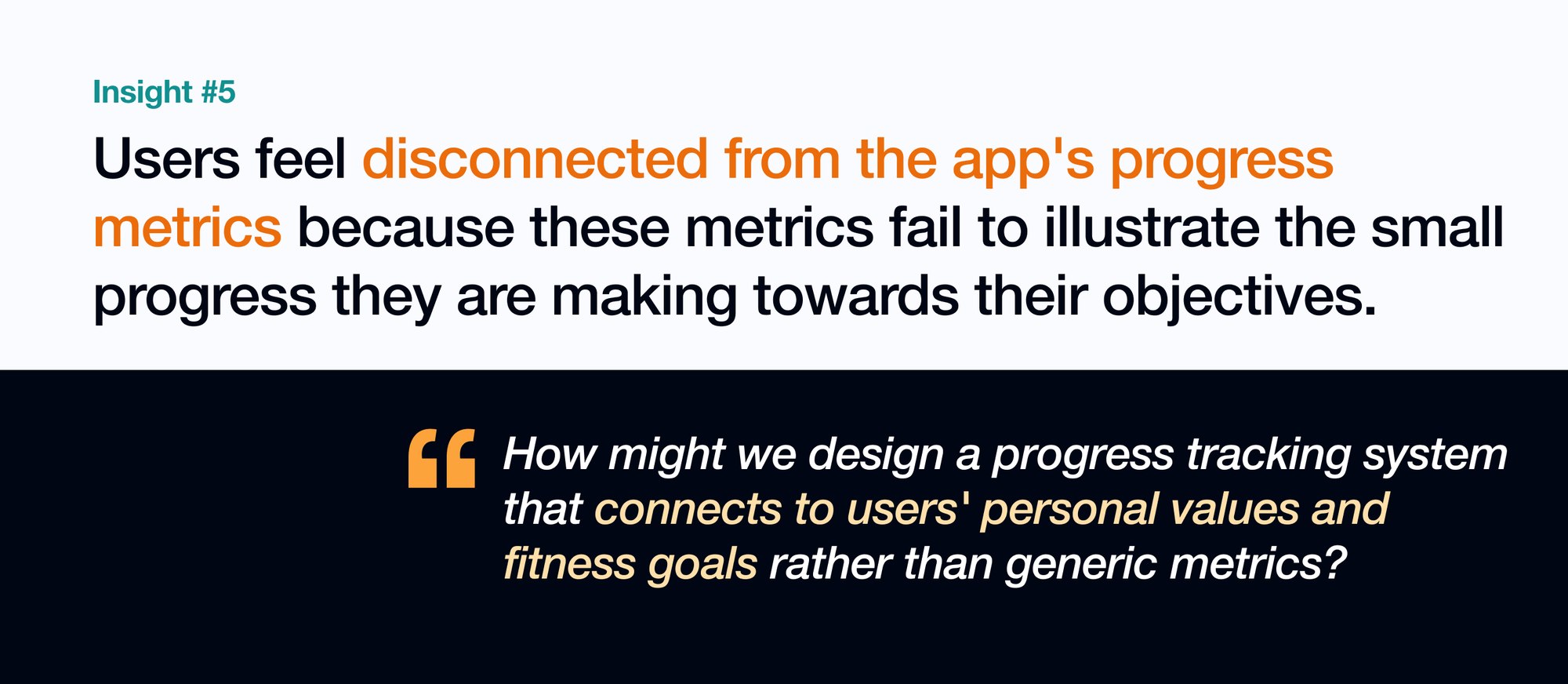
RESET: a framework for sustained engagement
I translated the five insights into a UX framework grounded in Self-Determination Theory, shifting the design goal from simply triggering behavior to supporting longer-term motivation.
Connect movement to what users personally value. RESET became the backbone for Pace, giving every major feature a behavioral purpose rather than designing features in isolation. Before designing the product, I translated the framework into 20 feature concepts and tested them with 20 college students familiar with fitness apps. The strongest concepts became the foundation for Pace’s product architecture and feature prioritization.
A fitness app that doesn’t judge you
The visual system reinforces that philosophy through a focused dark interface, high contrast, soft glass-effect cards, smooth motion, and encouraging feedback. The interface should never make users feel behind. It should meet them where they are.
Every friction point became a design decision
I ran two rounds of unmoderated usability testing with college students who had experience using fitness or health tools. The biggest usability problems weren’t with the overall concept. They were with finding, understanding, and controlling the features. That gave me a very concrete iteration backlog.
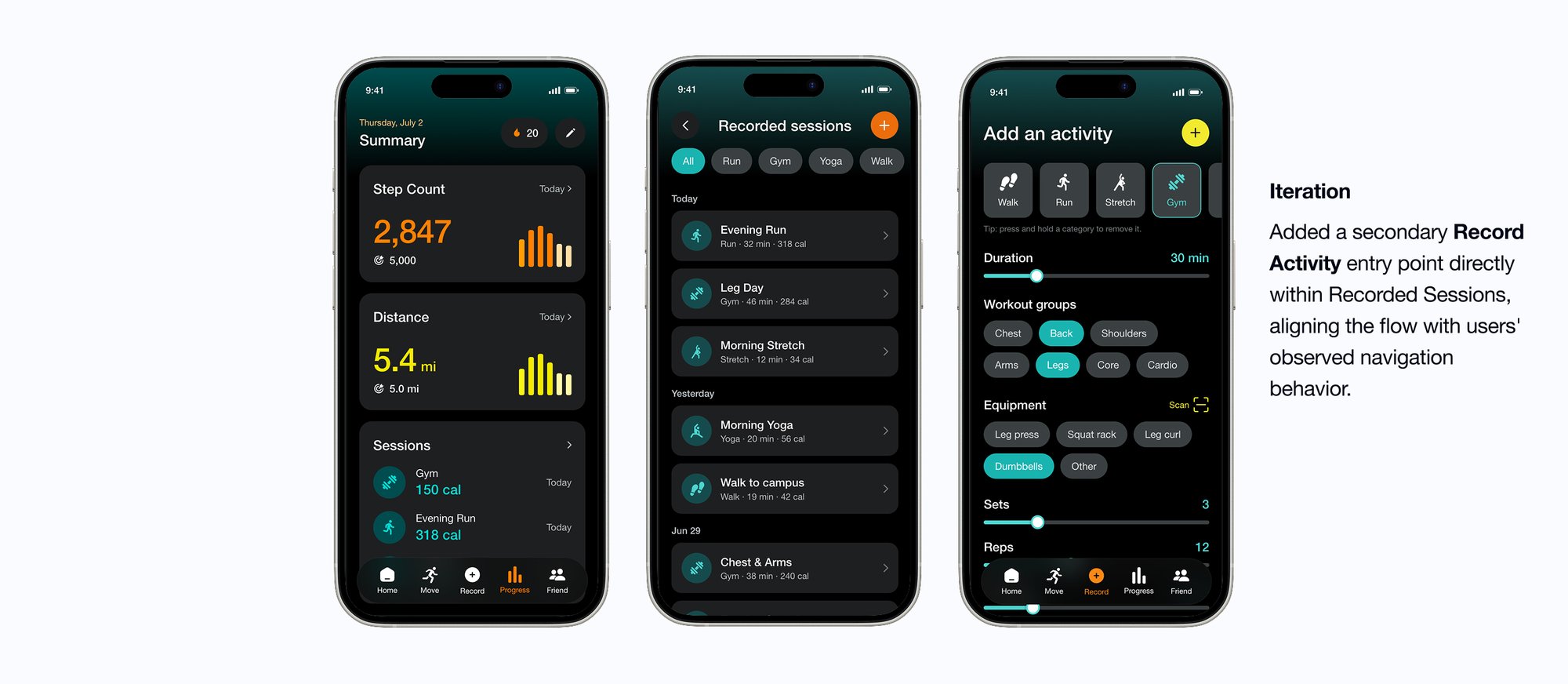
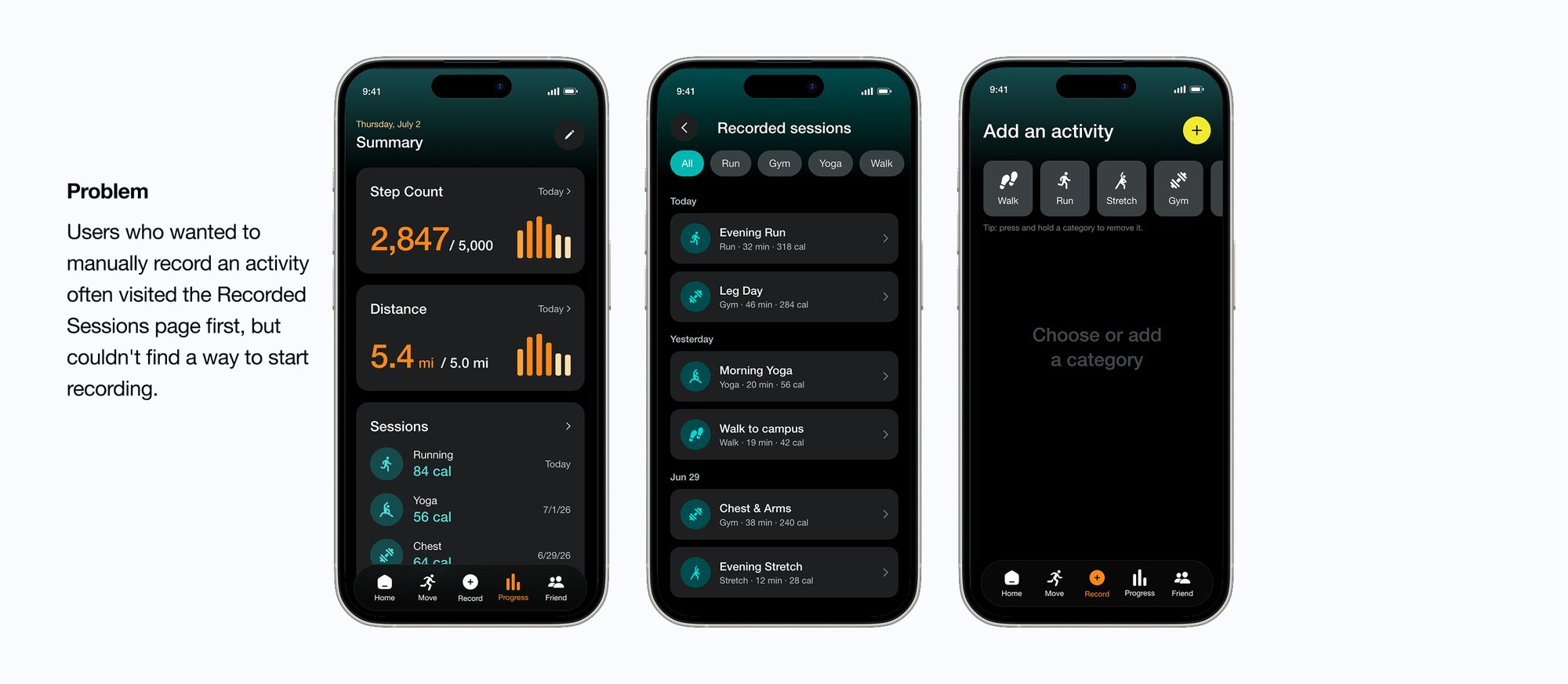
01 Expand entry points for recording activity
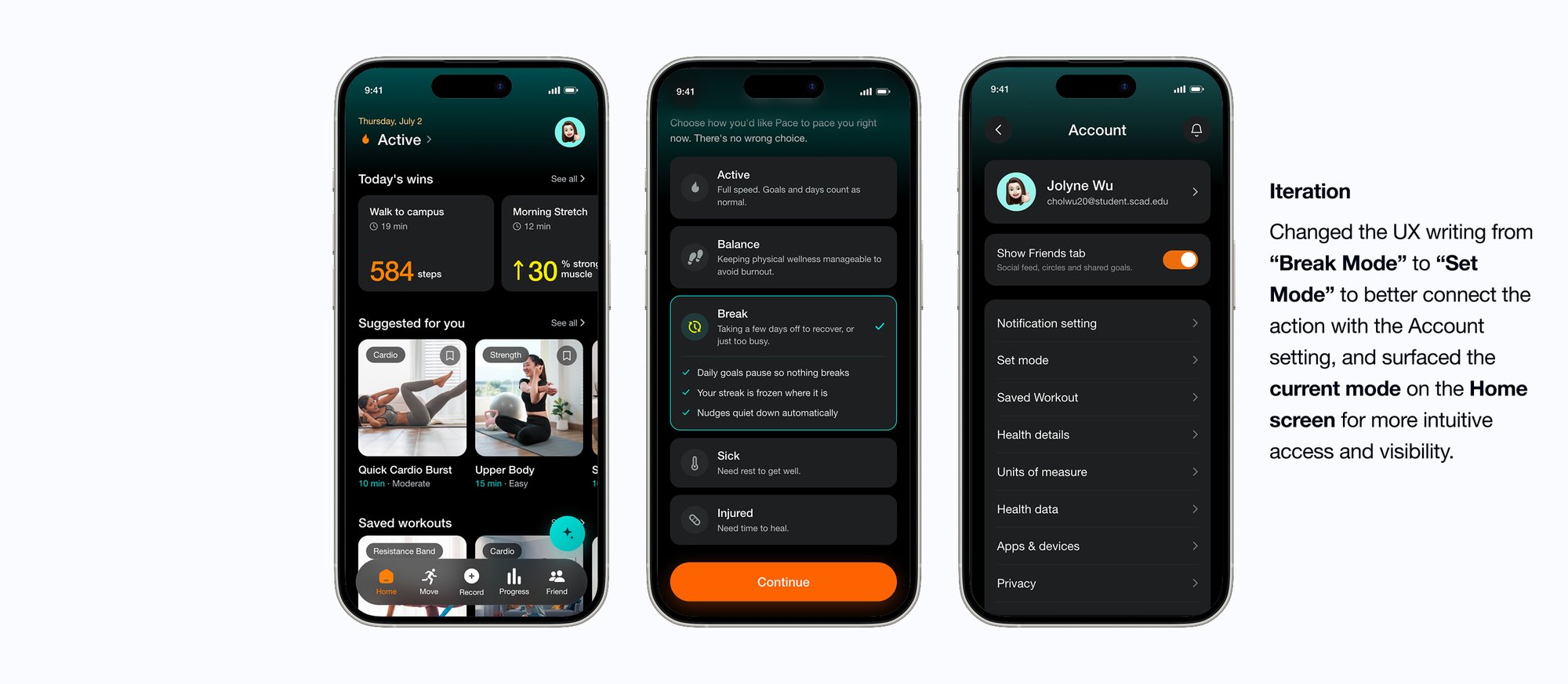
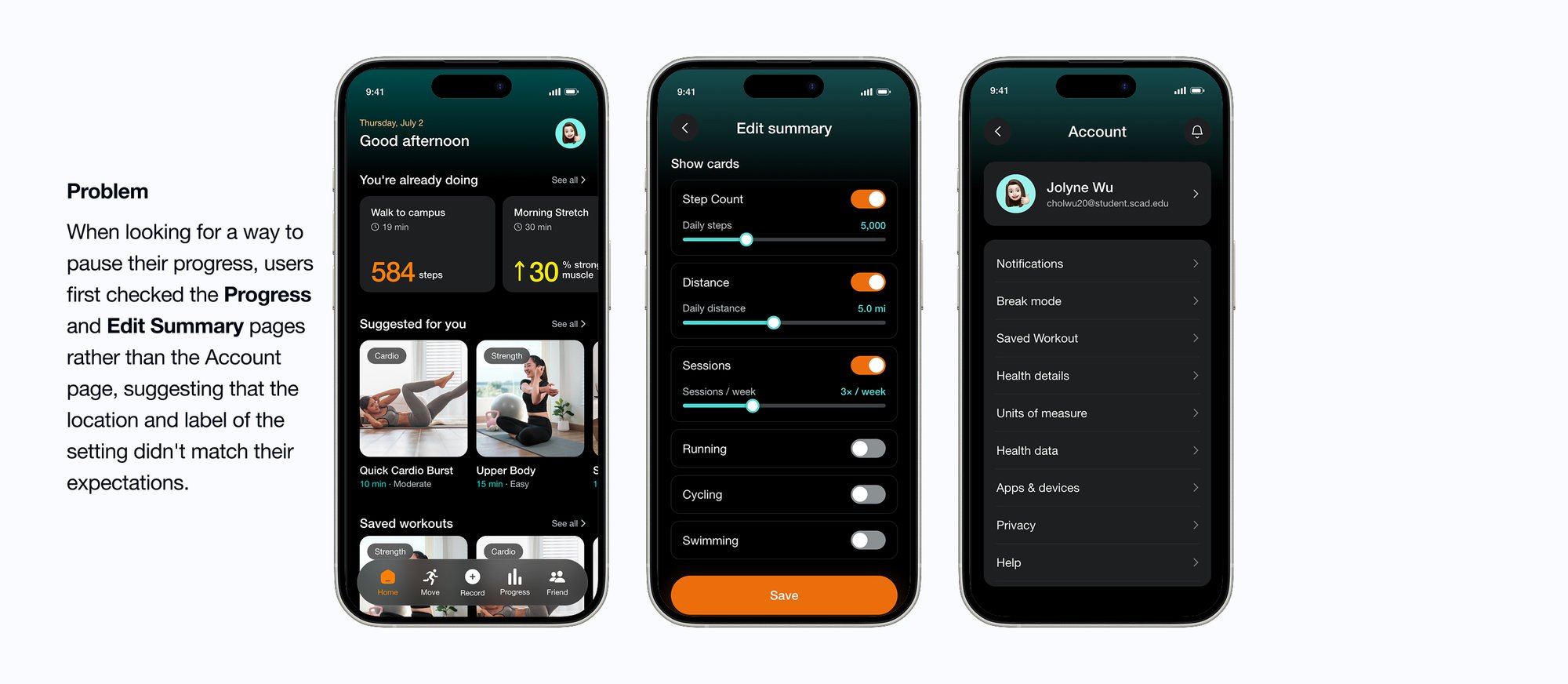
02 Align mode settings with users’ mental models
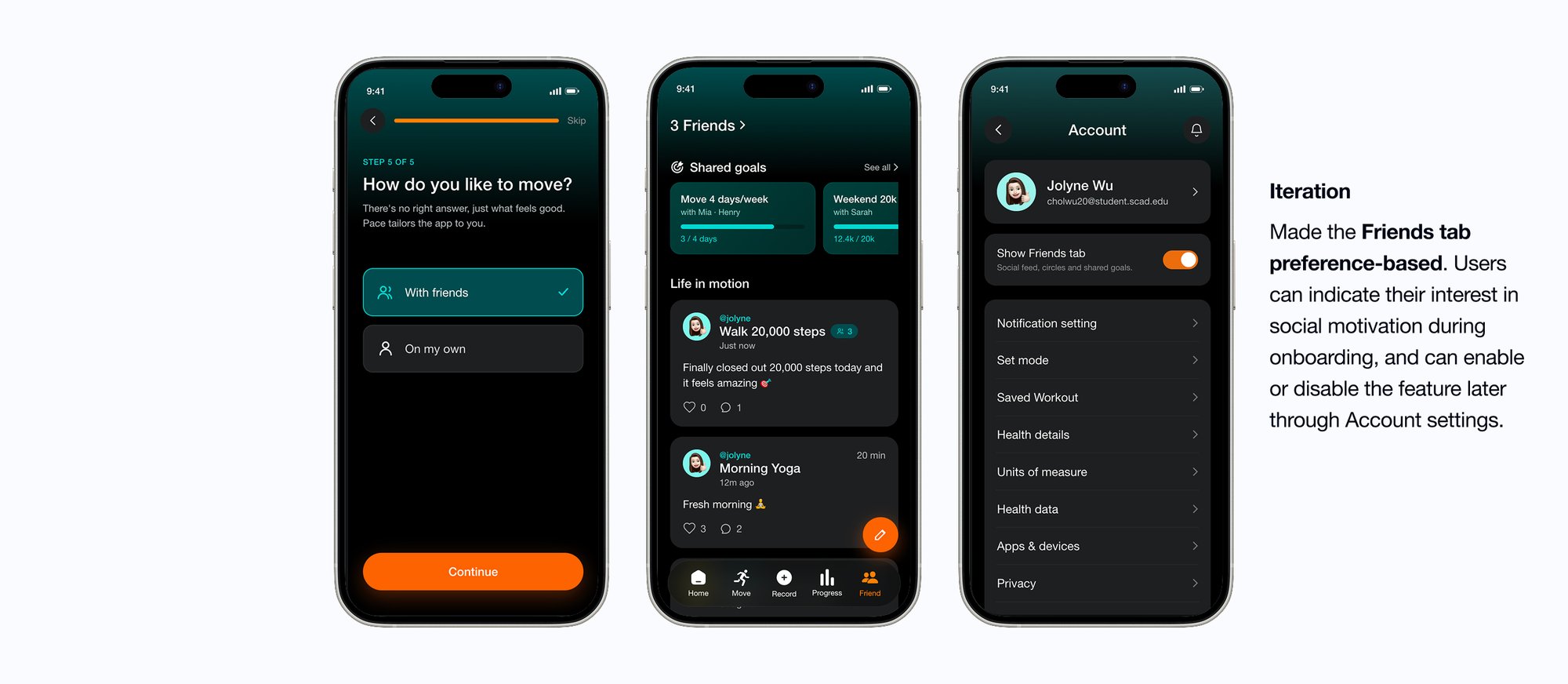
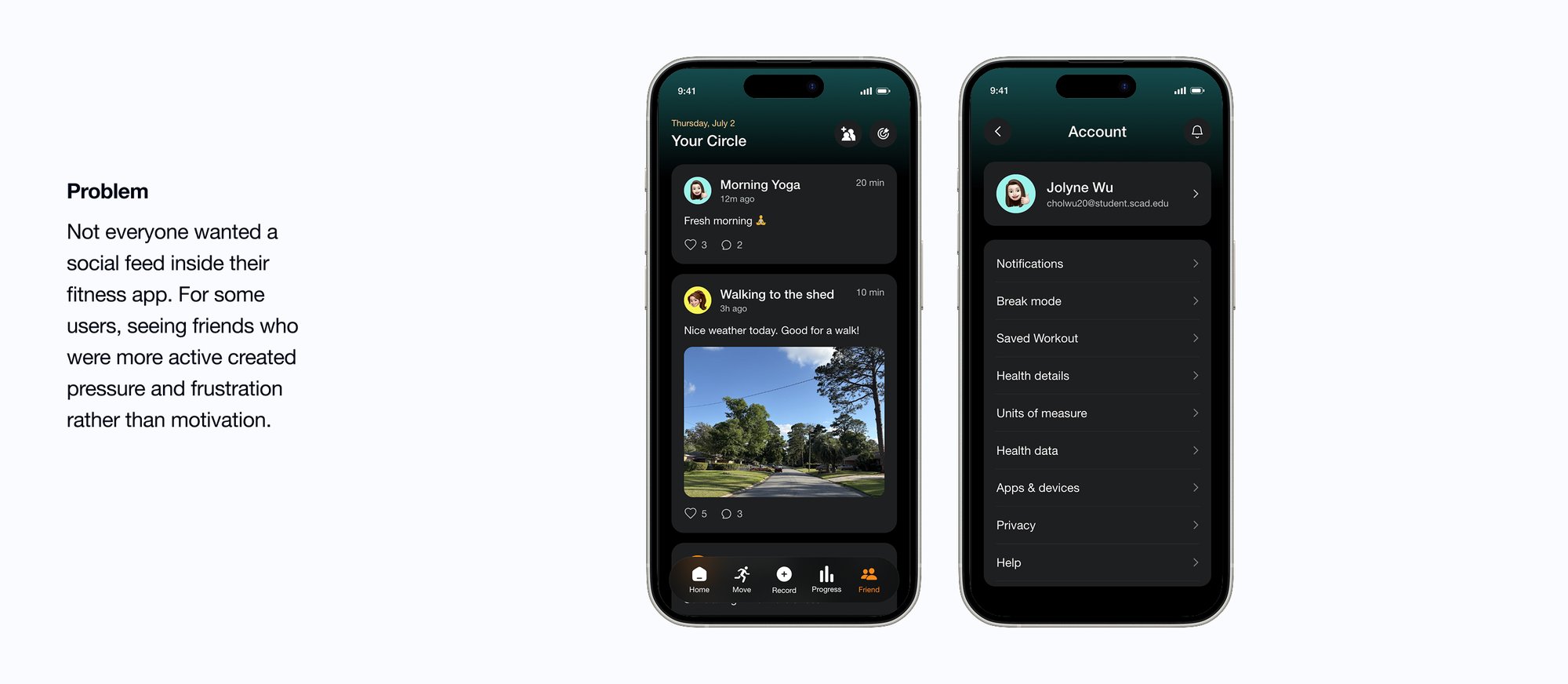
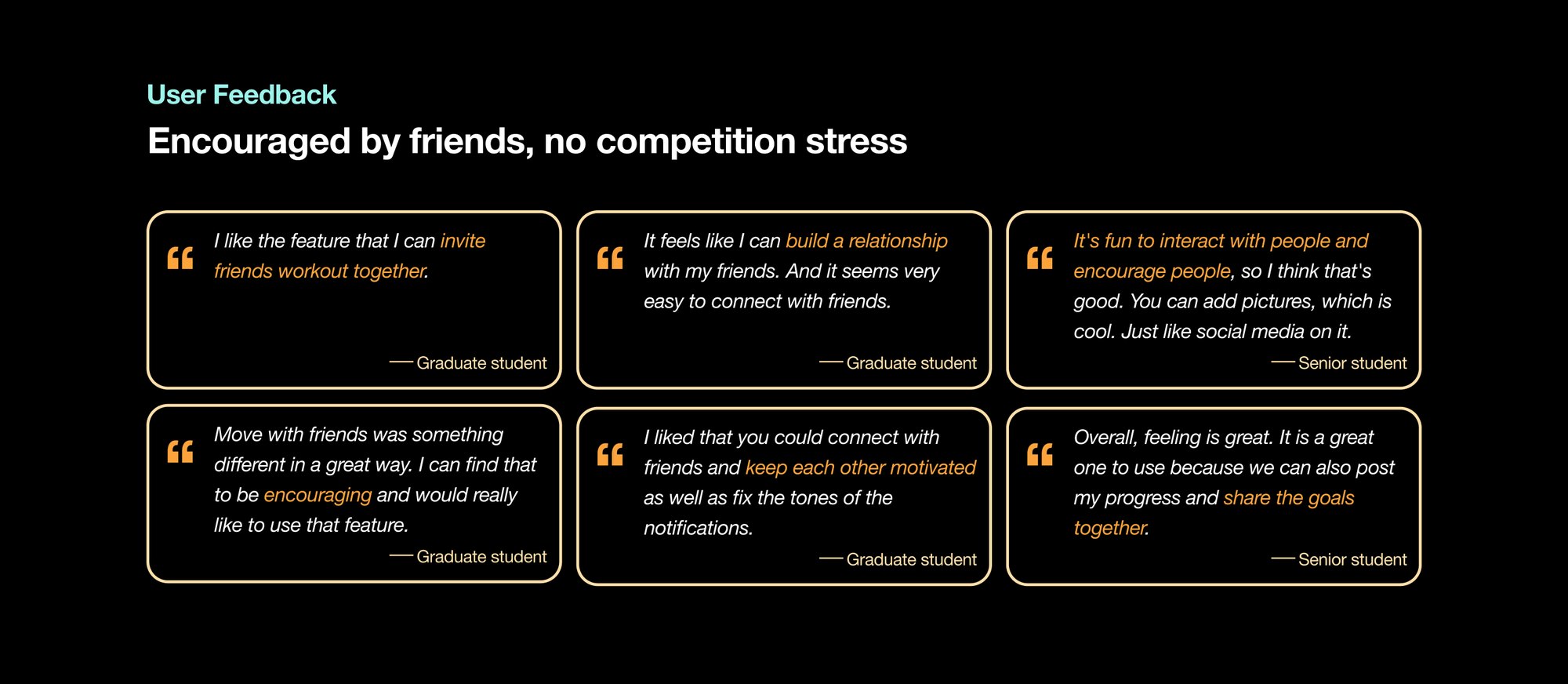
03 Make the social experience optional
01 Automatic movement tracking
Pace connects to health data and wearable devices to automatically recognize movement, reducing the need for manual logging. Manual recording remains available as a fallback when automatic detection misses an activity.
02 Show users what their movement means
Rather than focusing only on generic fitness metrics, Pace connects activity to personal values and goals. The home experience prioritizes what users have already accomplished, helping progress feel cumulative instead of punitive.
03 The right activity for right now
Pace recommends activities based on user preferences and history, with filters for category, duration, level, and equipment. The goal is to keep movement content varied and relevant rather than relying on a static workout library.
04 A nudge should feel helpful, not nagging
Users can control when and how Pace reaches out, while the system avoids interrupting active workouts. Notification timing, frequency, and tone are designed around the user’s context and preferences.
05 A break shouldn’t erase your progress
Instead of resetting streaks or showing users what they’ve missed, Pace lets users pause their goals during busy periods. The experience adapts expectations without removing support.
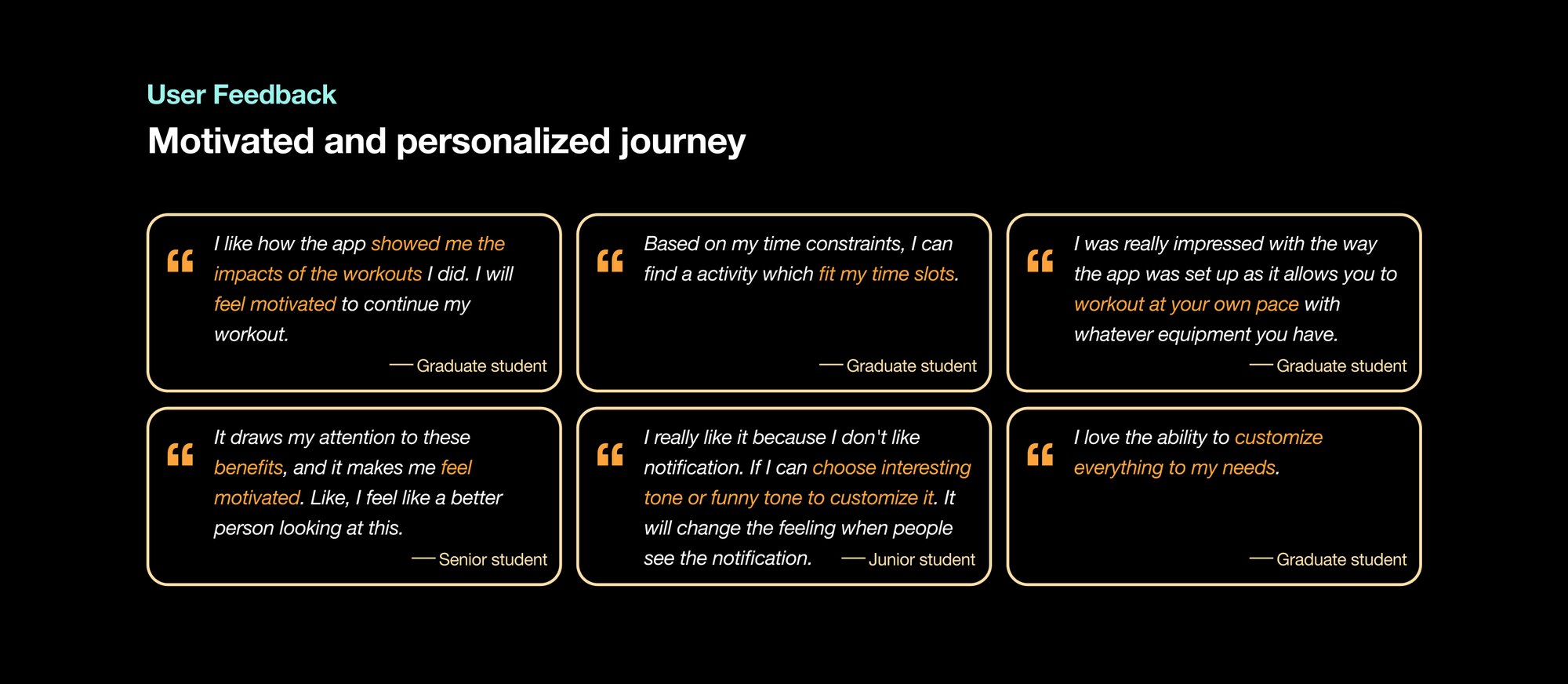
Across the two rounds, Pace’s overall usability score increased from 81.25 to 84.25 SUS
Did the iterations actually help? I ran a second round with 24 participants using the same seven-task structure. The UEQ results were also benchmarked against a dataset of 21,175 people across 468 studies, giving the experience scores additional context beyond the study sample alone.
Reflection
The goal was never more steps. It was understanding where people actually are in their relationship with movement, and designing something that helps them move forward from there, at their own pace.