
Jelly: designing AI personalized shopping journey
I owned the exploration and prototyping of the end-to-end user journey, focusing on onboarding, TasteGenome, product discovery, saving, gifting, and shopping.
Impact & outcome
Taste-Driven Discovery
Context-Aware TasteBrain
Jelly needed to turn taste intelligence into a usable shopping experience
Jelly is Bestomer’s upcoming personalized shopping product, designed to help people discover products through their unique taste. TasteGenome represents a user’s evolving taste profile, while TasteBrain analyzes taste signals to generate insights and recommendations.
Taste
TasteGenome
TasteBrain
The biggest UX questions were about trust, value, and actions
I mapped the end-to-end journey and examined where users could experience friction, especially around sharing personal data, understanding AI-generated taste insights, transitioning from TasteGenome into shopping, and organizing saved products.
Users need value before they give more data
AI personalization needs evidence
A “save” doesn’t always mean “buy”
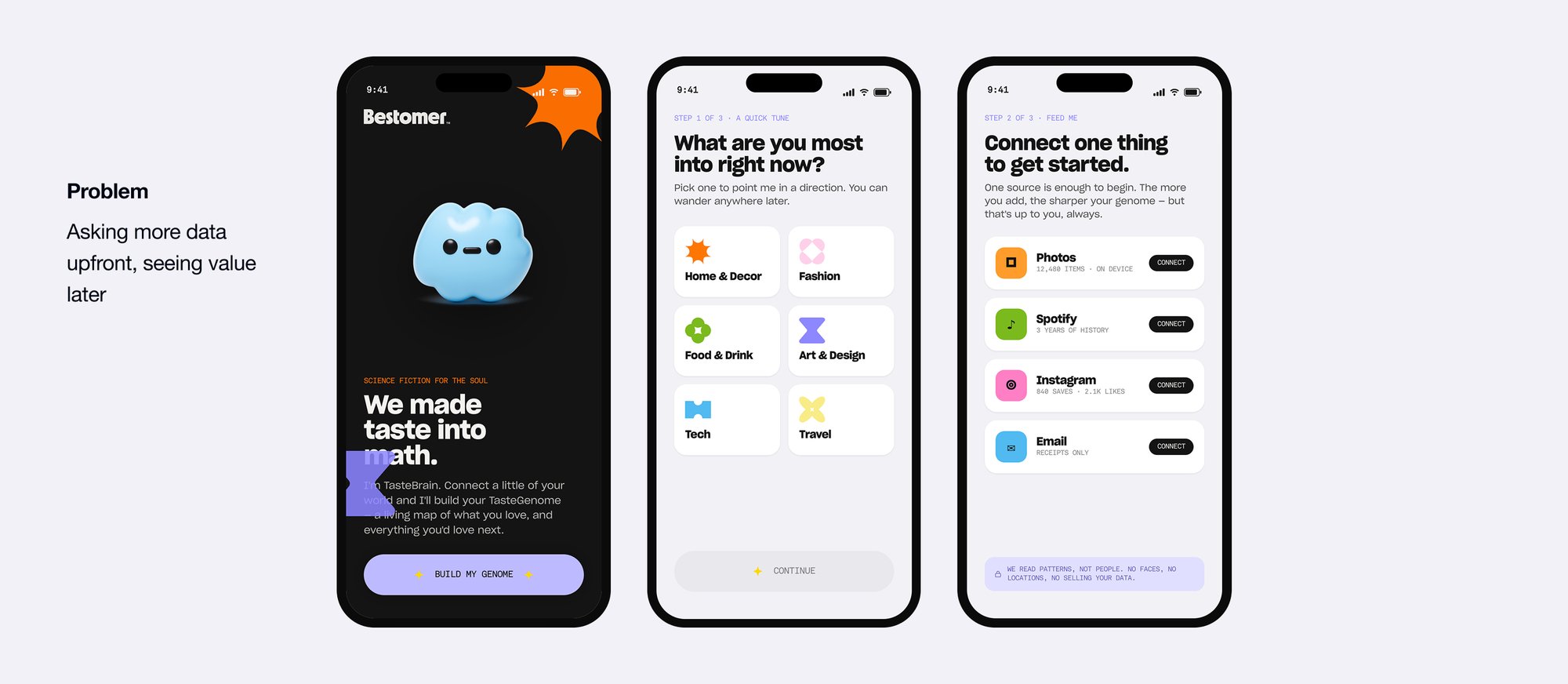
Users were being asked to provide data in personalization before they had enough value or trust to understand why it mattered
How might we create an experience that gives users immediate value from their taste while gradually earning enough trust to deepen personalization?
Redesigned the journey around progressive value instead of a linear funnel
The initial journey treated the experience as a relatively straightforward path from onboarding to analysis to shopping. I challenged that structure and explored branching paths, return loops, progressive data collection, and multiple ways to enter discovery.
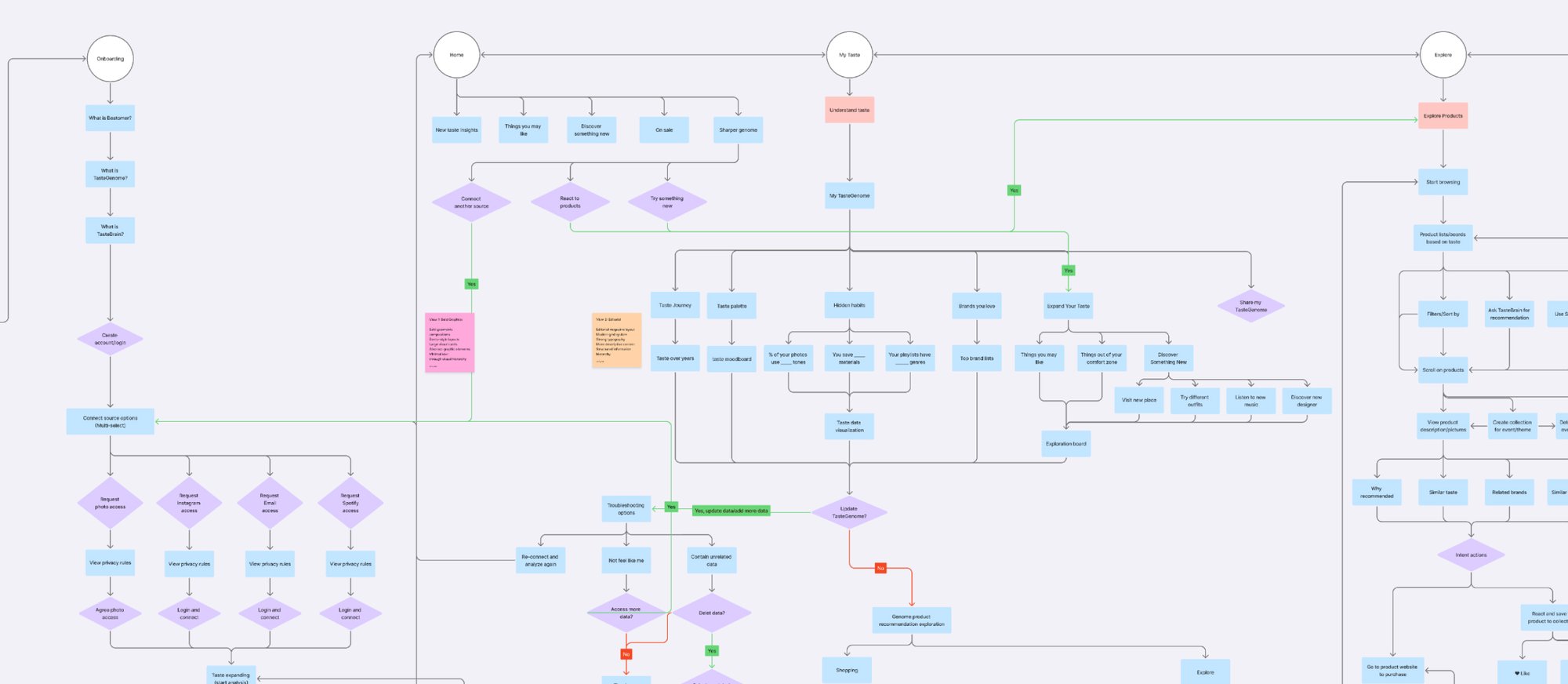
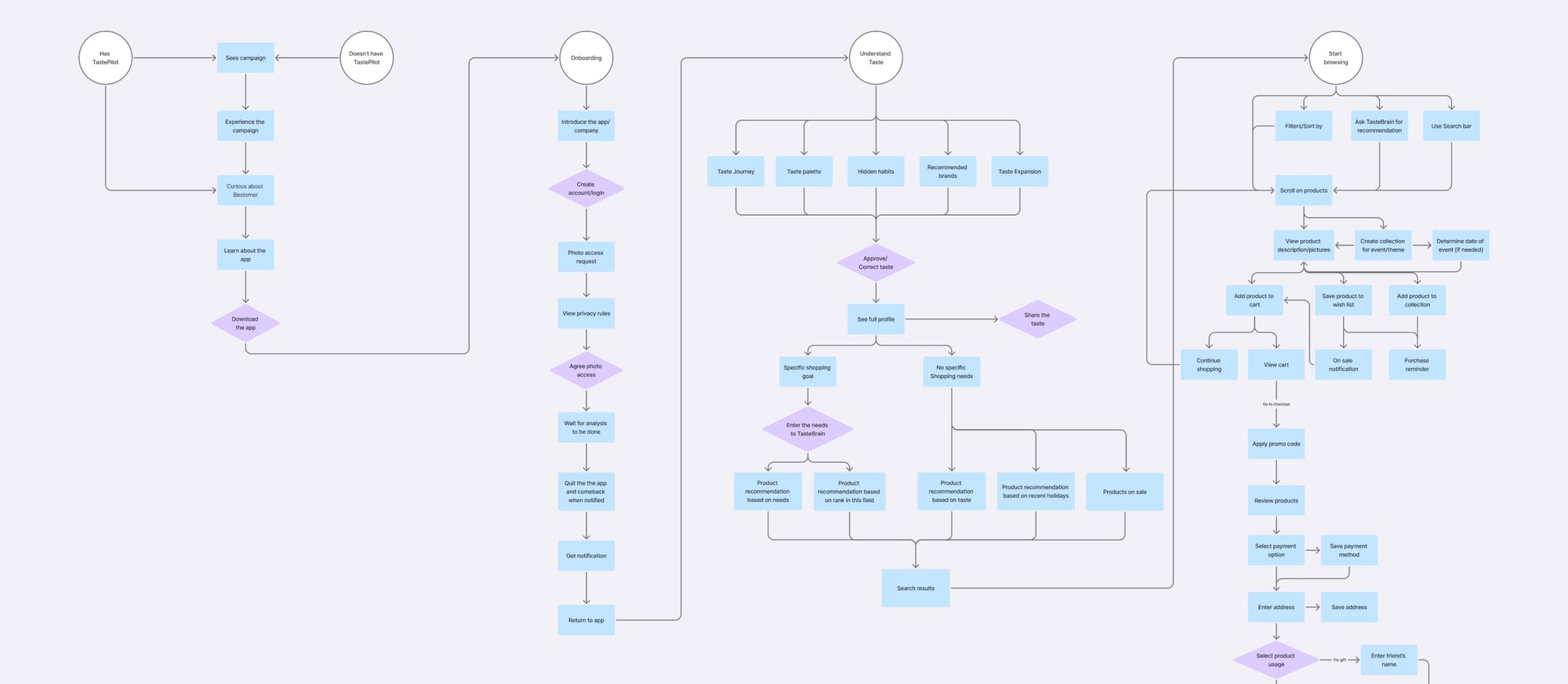
Each iteration moved the user closer to value and gave TasteBrain AI better signals
Through feedback and flow exploration, I repeatedly challenged where decisions belonged in the journey. I reconsidered how much data onboarding should request, whether users needed to fully understand their TasteGenome before shopping, and how saving and gifting could become more fluid parts of discovery.
01 Progressive onboarding
02 Taste-to-shopping transition
03 Collection organization
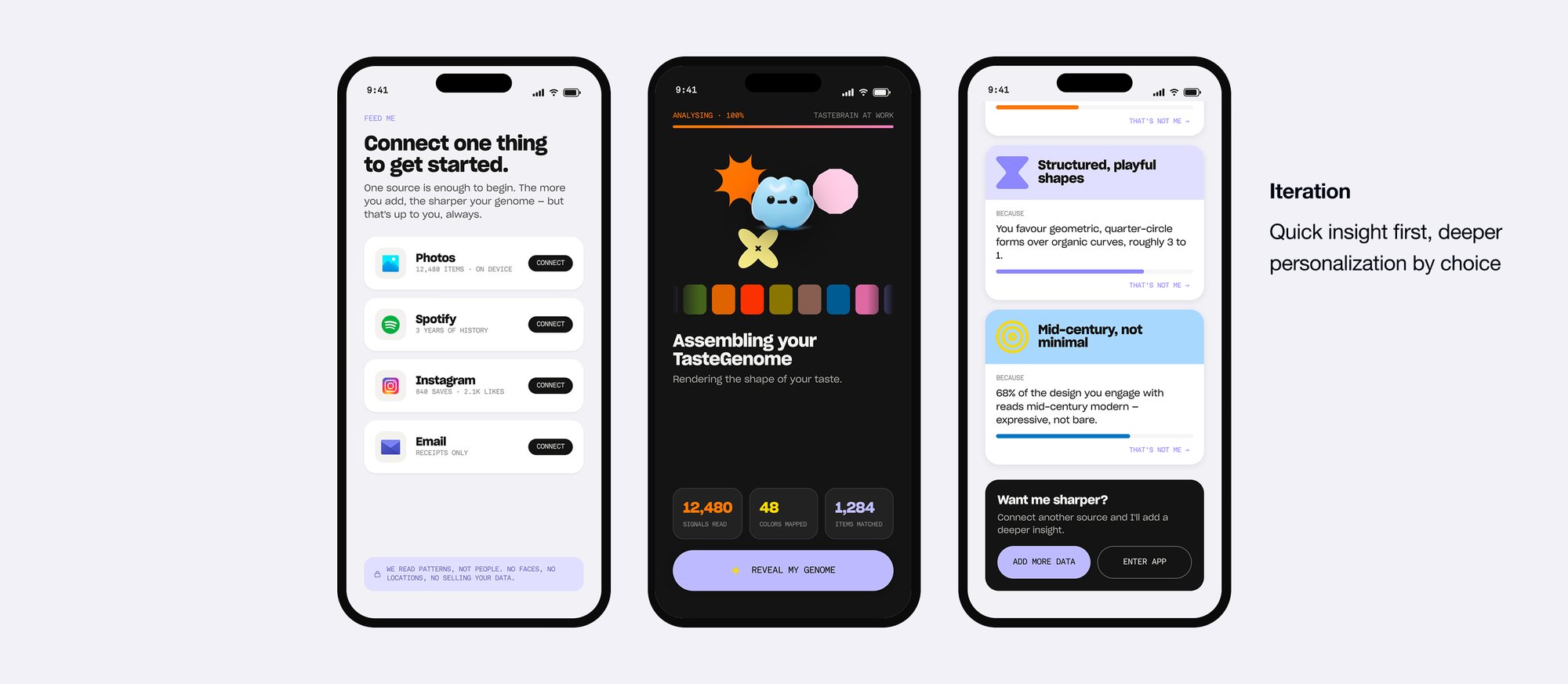
01 Progressive onboarding lets users experience value before sharing more
Instead of requiring users to connect multiple data sources before seeing their TasteGenome, I explored a progressive model: start with one small input, generate 2–3 quick insights, then let users choose whether to deepen their profile with additional data.
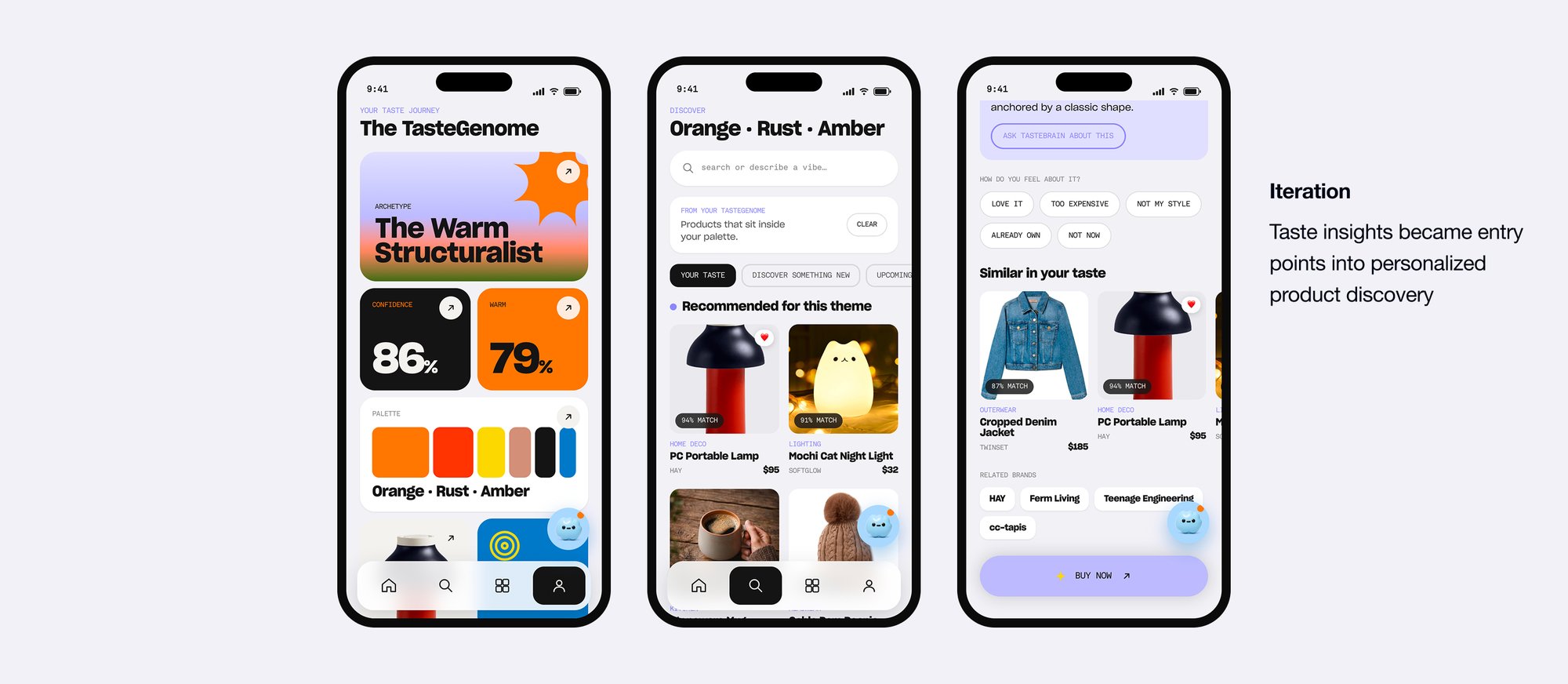
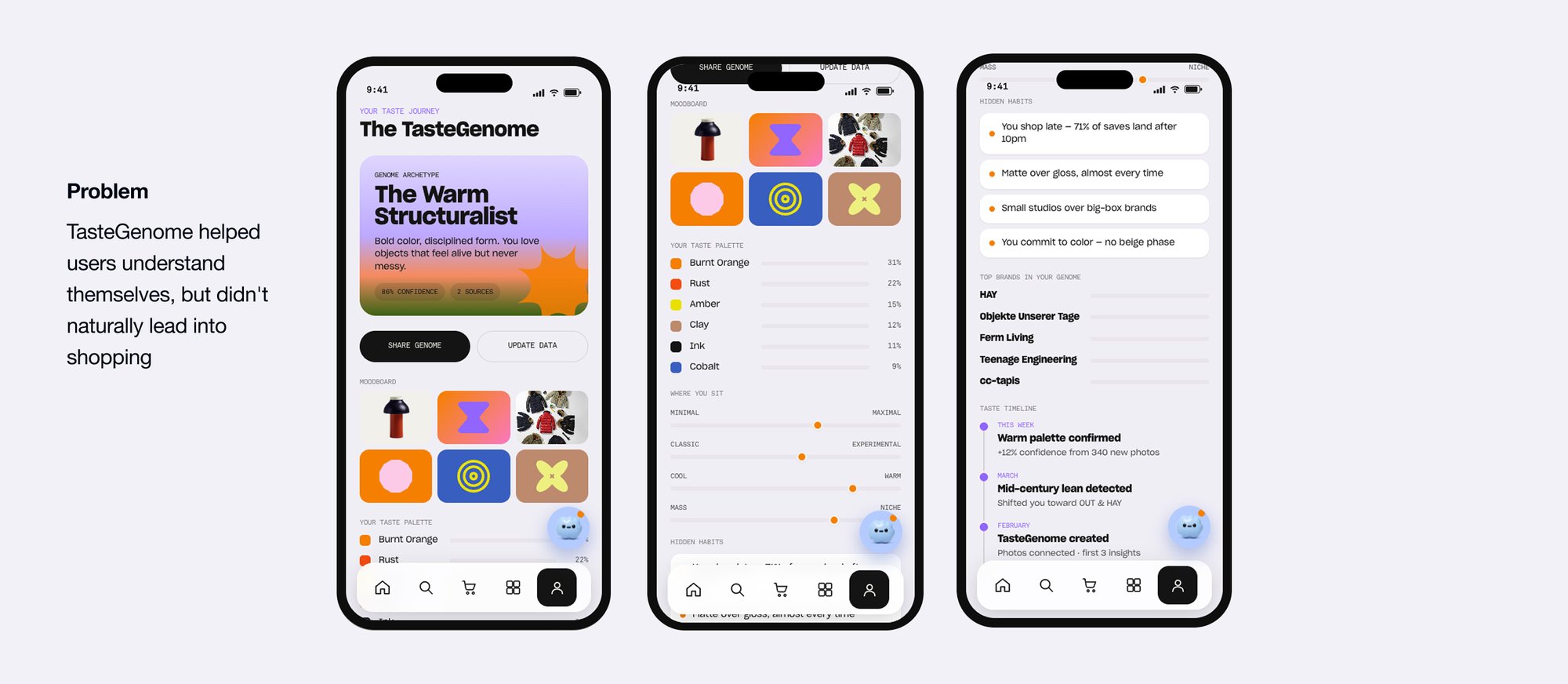
02 TasteGenome turns personal insights into product discovery
I reframed TasteGenome from a static profile into an active discovery tool. Personalized taste dimensions could become navigation into recommendations, allowing users to move naturally from understanding what they like to exploring products that reflect it.
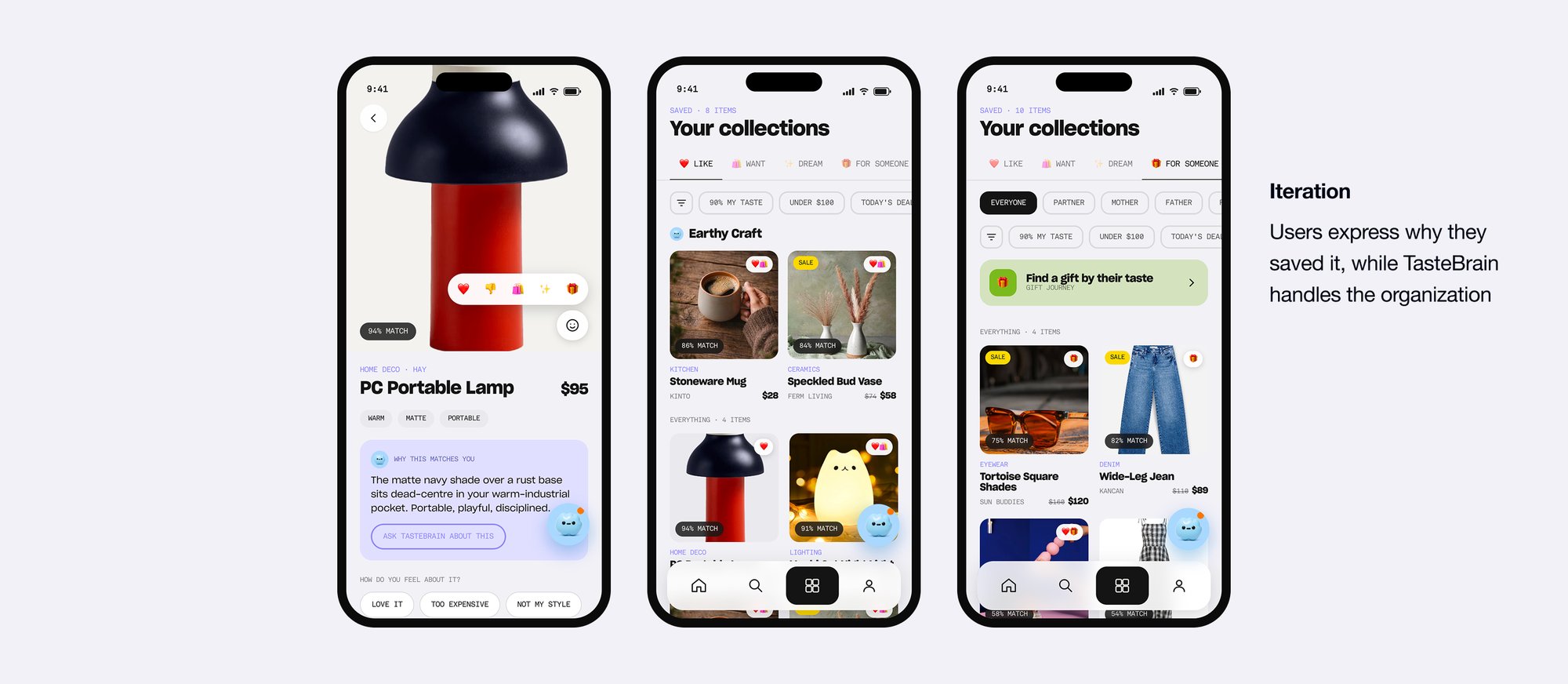
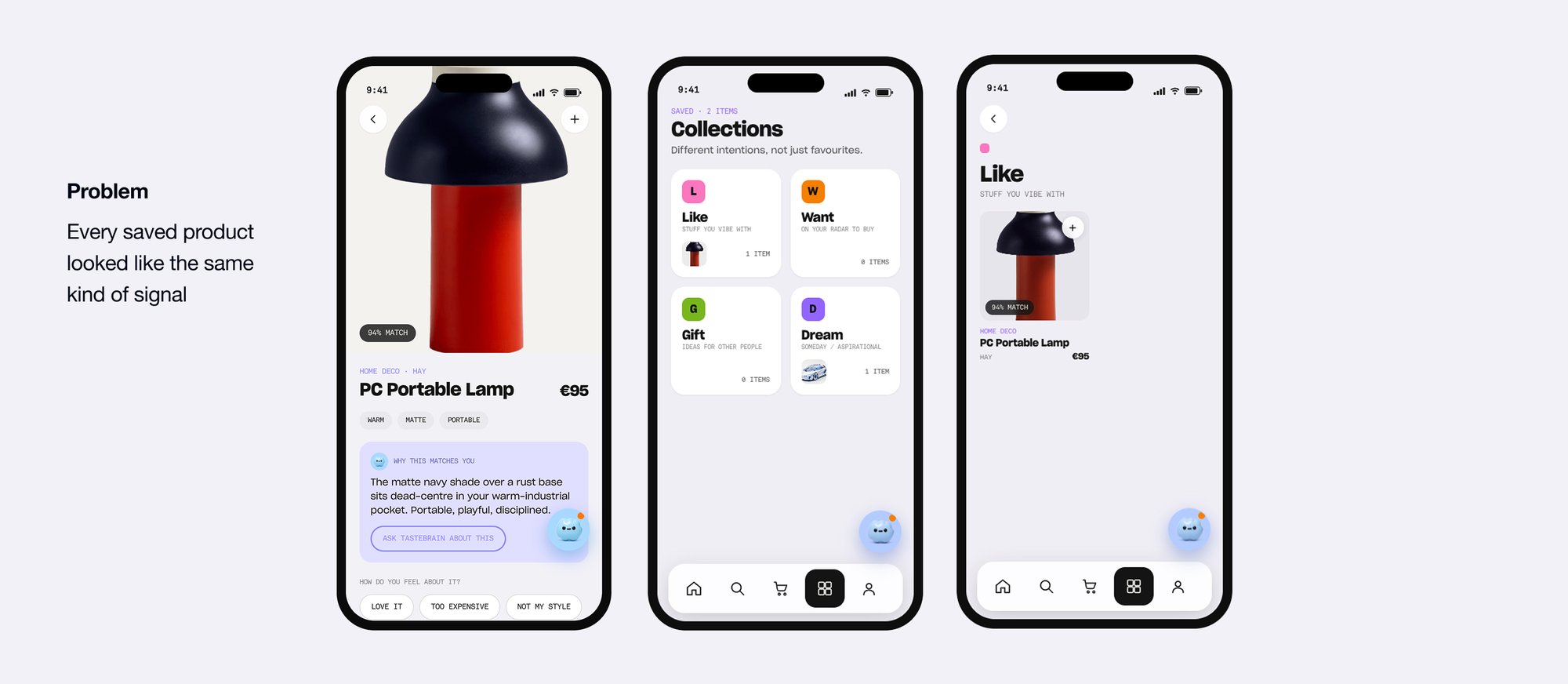
03 Intent-based saving turns everyday actions into taste signals
I explored replacing a generic “Save” action with intentional reactions such as Like, Want, Gift, Dream, and Custom. TasteBrain could then handle much of the organization through automatically recognized categories and faceted filters.
04 TasteBrain combines taste with context to make recommendations useful
TasteBrain combines the user’s taste with the context they provide. Users can browse recommendations based on their taste or chat with TasteBrain about a specific need, such as finding an outfit for a wedding, preparing for a party, or choosing a Mother’s Day gift.
The final flow became a product blueprint, not just a navigation map
The resulting journey connected onboarding, TasteGenome, discovery, saving, gifting, and shopping into a more flexible product ecosystem. It also surfaced critical friction points before launch and created clearer strategies for how privacy, personalization, and user intent could shape the product.
Reflection
This project changed how I think about user flows. Instead of treating a flow as a map of screens, I began using it as a tool to question product assumptions, connect user behavior with business goals, and design the experience the product should become.