
Readaroo: Gamified reading app for dyslexia
Readaroo is an AI-powered reading app designed to help children with dyslexia overcome literacy challenges through gamified, multi-sensory learning.
Impact & outcome
Read with multi-sensory reading process
Motivate children with gamification
How to empower dyslexic readers through design?
In the SCAD UX Design course, we explored neurodiversity and aimed to create solutions for this community. Motivated by a friend’s experience with dyslexia, which often goes undiagnosed, we focused on developing support for dyslexic readers, ensuring an engaging reading experience for everyone.
Visiting the Royce School to understand learning pain points
We conducted interviews with 7 experienced teachers who have worked with students with dyslexia. Their valuable insights helped us identify key user needs and uncover pain points in the learning process.
Common signs of dyslexia
Effective teaching methods
Negative impact
Children with dyslexia struggle to process and understand information during learning, leading to confusion and frustration
How might we create accessible, engaging educational tools for children with dyslexia to enhance their reading and comprehension skills?
Combining visual, auditory, and tactile elements to enhance the learning experience
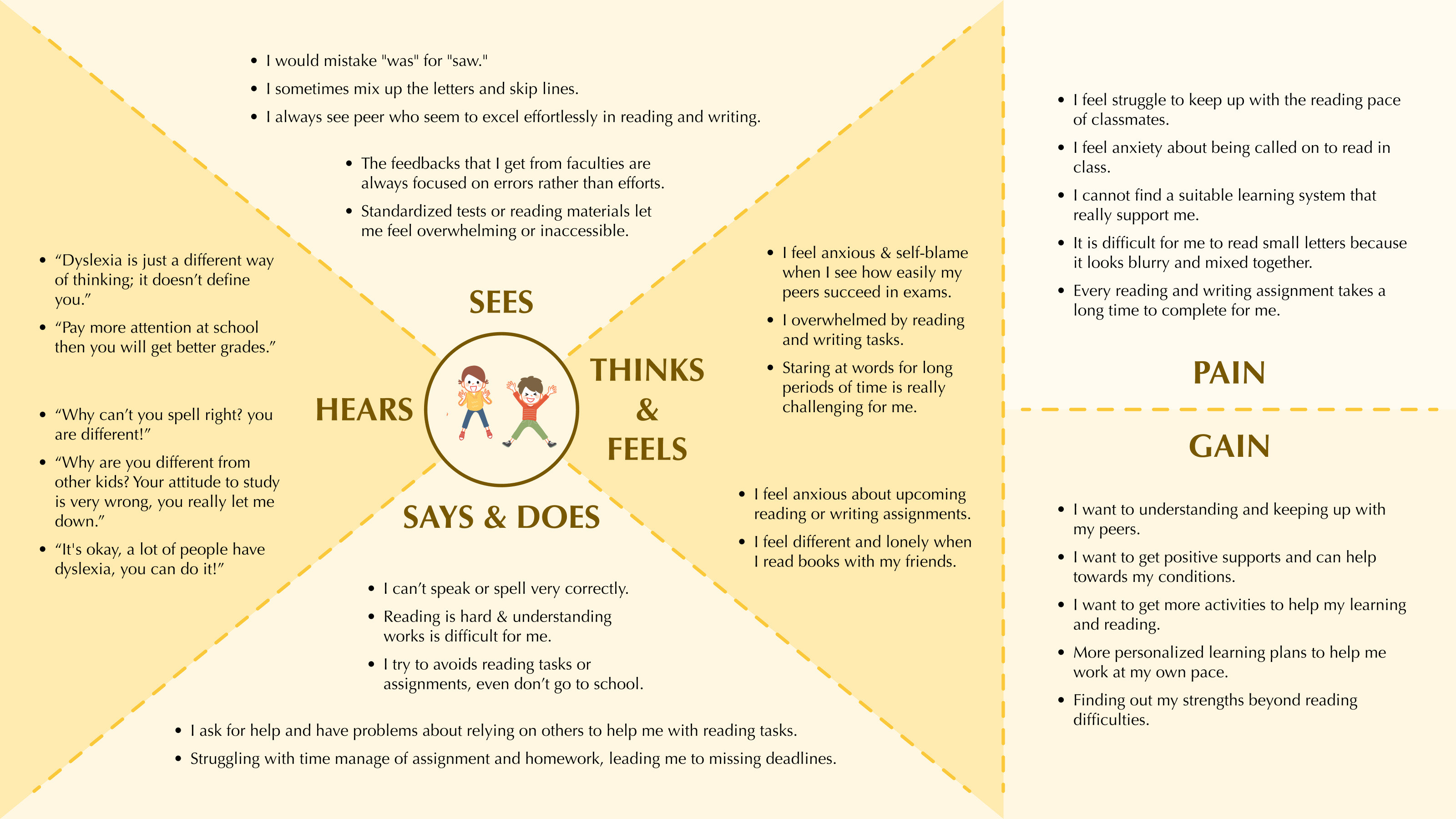
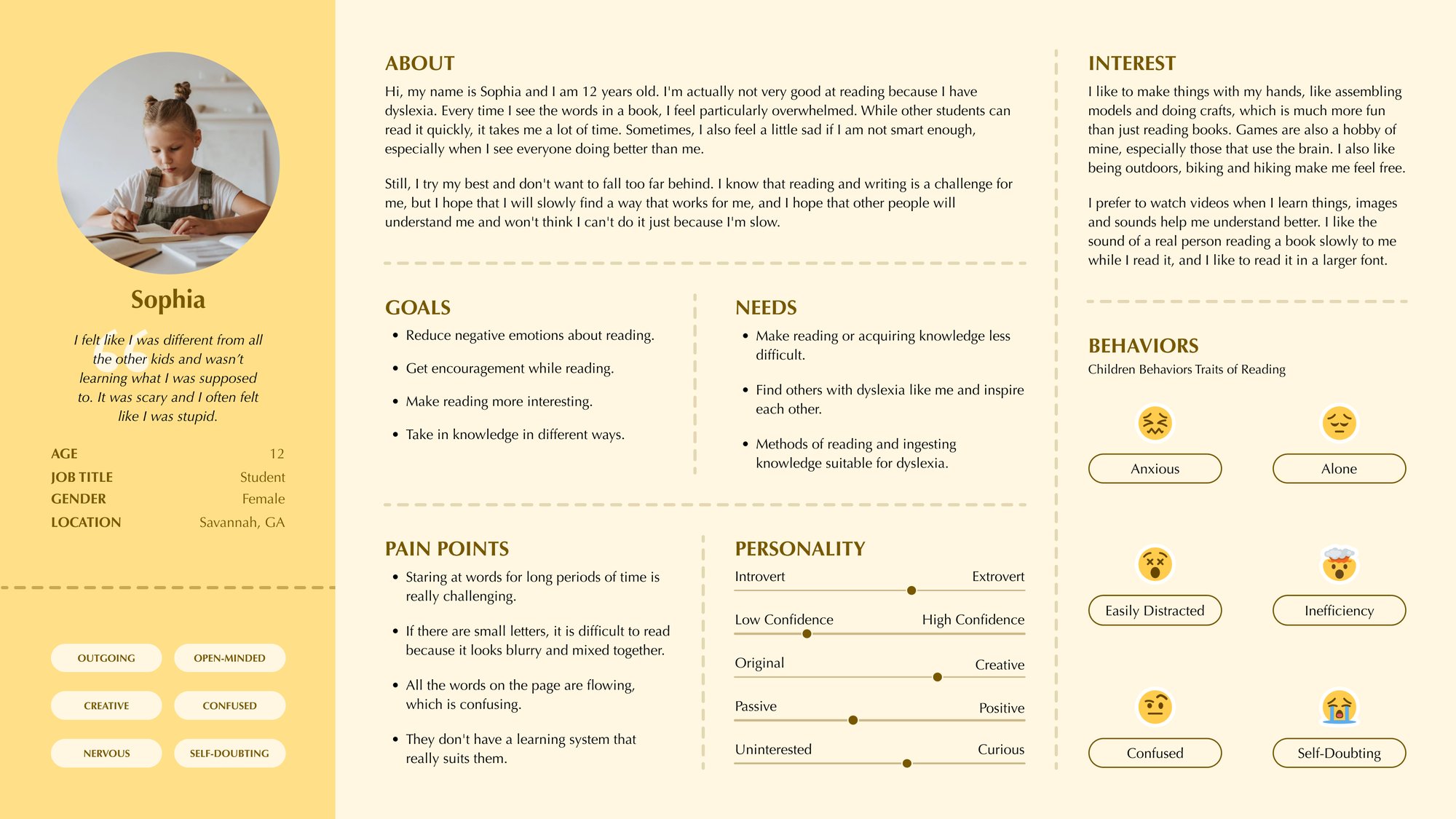
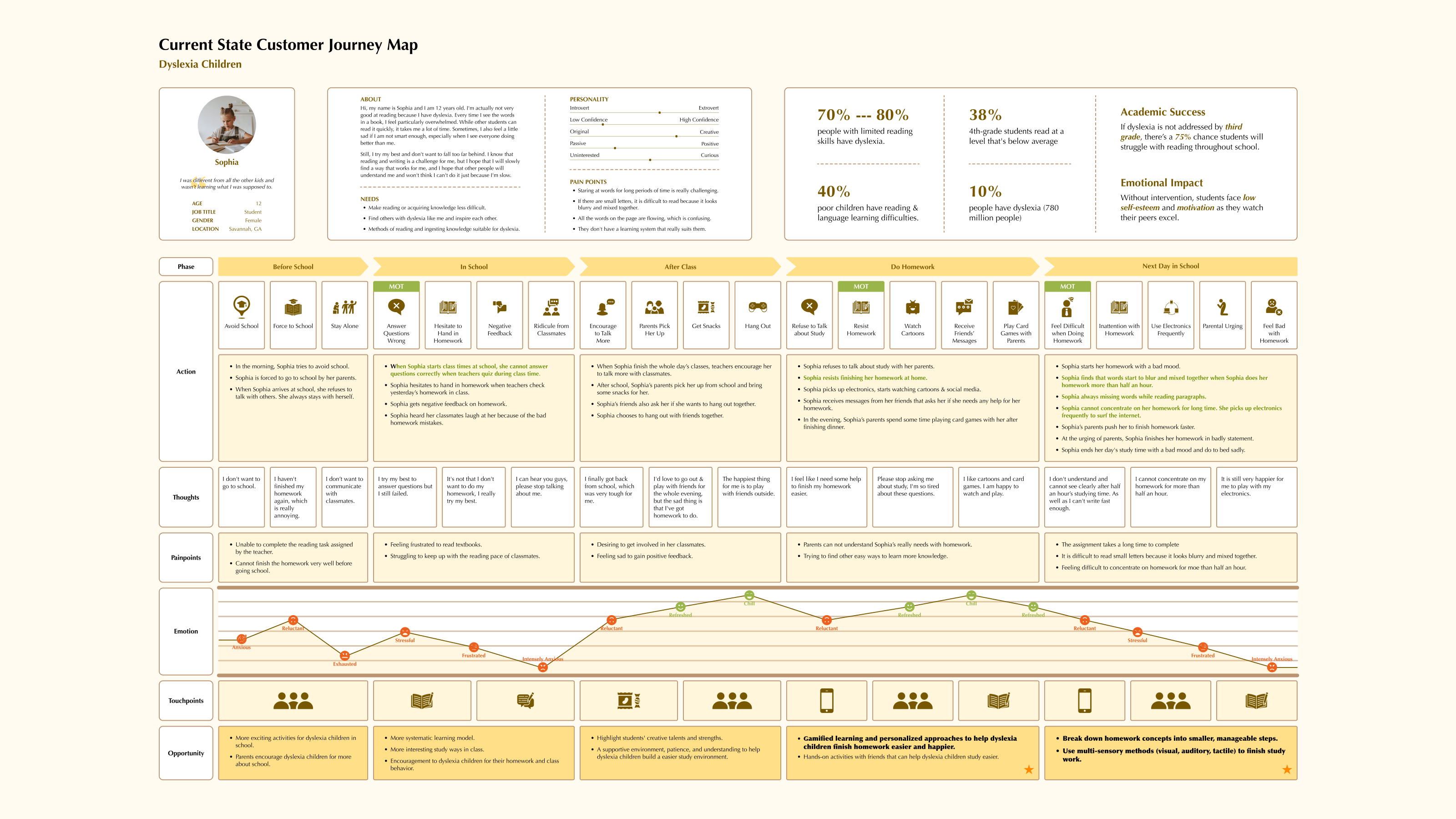
After identifying the problem, we began crafting personas, empathy maps, and journey maps, uncovering design opportunities from their school experiences. We explored concepts such as multi-sensory learning, gamification, the use of dyslexia-friendly fonts, and shorter study sessions.
01 Read with multi-sensory reading process
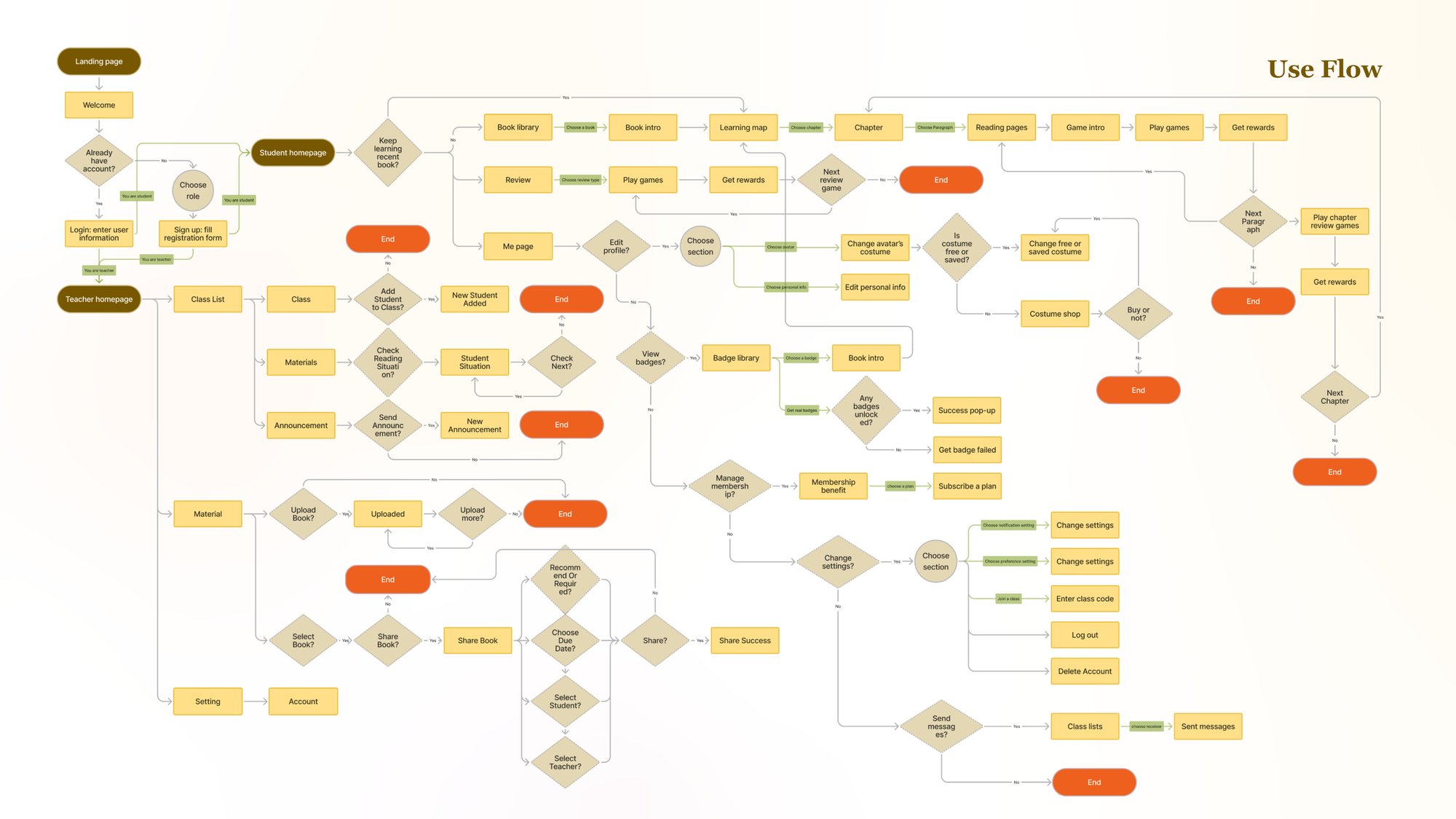
Help to build interest and motivate child on reading using enjoyable learning map and multi-sensory reading process. The learning map is an interactive feature that guides students through their reading journey. It organizes chapters and review games into a clear, gamified progression, allowing students to unlock new stages as they complete previous ones.
02 Motivate children with gamification
The reward system motivates students with streaks, personal levels, and customizable avatars as they complete tasks. Finishing all book stamps earns them a unique book badge, and leveling up unlocks additional rewards, making learning both fun and engaging.
03 Manage and check students progress anytime
The class management feature allows teachers to efficiently oversee their students’ progress and activities. Teachers can add students to their class and track individual performance. They also can make announcements to keep students informed and engaged.
Readaroo is designed to support children with dyslexia, in overcoming literacy challenges
Our team partnered with the Royce School to test prototypes with 6 students (grades 1 to 12) and 3 teachers, gathering valuable feedback to refine and improve the app’s design.
Reflection
Empathy and understanding users takes time. I prioritized their emotional safety and encouragement before adding functionality, ensuring every interaction fosters effort, progress, and self-belief.